The EU KIDS Act: four pillars, what changes for platforms, and where a Trust and Safety team should start preparing.
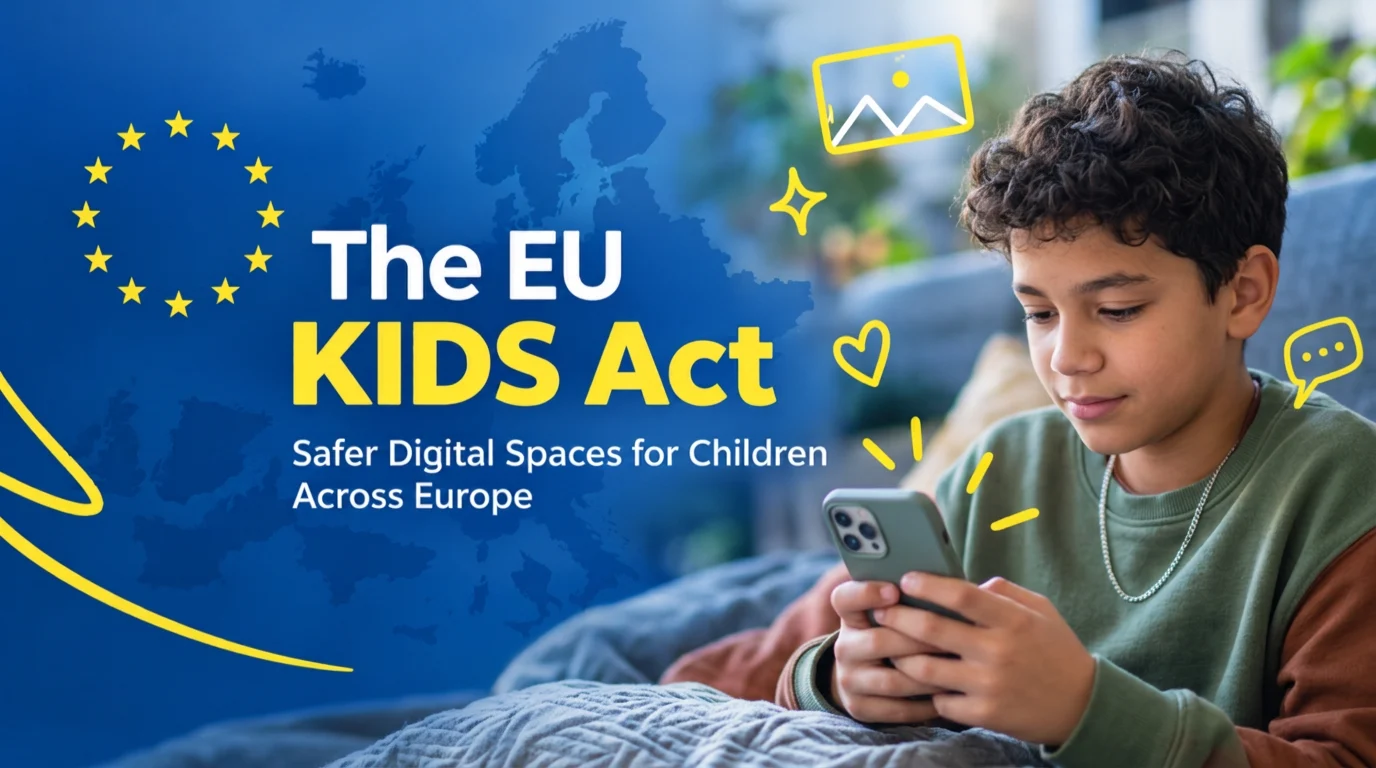
On 17 September 2026, the European Commission proposed the EU KIDS Act, a law meant to make the internet safer for children. It has not passed yet. The proposal now goes to the European Parliament and Council, a process that typically runs a year or more before anything becomes binding. Platforms that wait for the final vote will be starting late.
The proposal follows a report from the Special Panel on Child Safety Online, a group of more than 60 experts, including child psychiatrists, neurologists, and youth representatives, convened by von der Leyen and delivered in July 2026. The Commission also points to its own Eurobarometer survey, where 92 percent of Europeans named stronger protection for children online a top policy priority.
The burden of proof moves to platforms
Under current EU rules, regulators generally have to prove a platform caused harm before they can act. The KIDS Act flips that. Platforms will have to prove their services are safe by design, before problems appear.
That is a real shift in who carries the risk. It applies to social media, video sharing, online video games, AI companions, and chatbots, wherever the audience includes anyone under 18.
Gaming platforms are named directly
The KIDS Act names online video games specifically, alongside social media and AI companions. That is different from earlier EU rules, which focused mostly on social platforms.
If a product includes voice chat, an AI companion, guild or clan features, or any feed that ranks content for players, the safety by design pillar applies as directly as it applies to a social app.
Four pillars carry the law
For moderation teams pillars 2 and 4 will matter most
Pillars 2 and 4 assume a platform can act on reports quickly, explain its decisions, and show its work to an auditor. That takes infrastructure that already exists before an audit ever asks for it. It is worth being specific about where Amanda’s existing capabilities fit, and where they do not.

Two important questions:
Will it apply outside the EU
It applies to any platform offering services to users in the EU, regardless of where the company is based, the same territorial reach as the Digital Services Act.
When does it take effect
Not yet. It is a proposal submitted to Parliament and Council on 17 September 2026. It needs their approval first, which typically takes a year or more.
Get started now
The KIDS Act still has to clear Parliament and Council. That process could change details, but it will not change the direction. Platforms serving minors in the EU are heading toward safety by design as a legal requirement.
Mapping a current moderation and reporting setup against these four pillars now turns the wait for Parliament and Council into preparation time.