
By Hege Tokerud
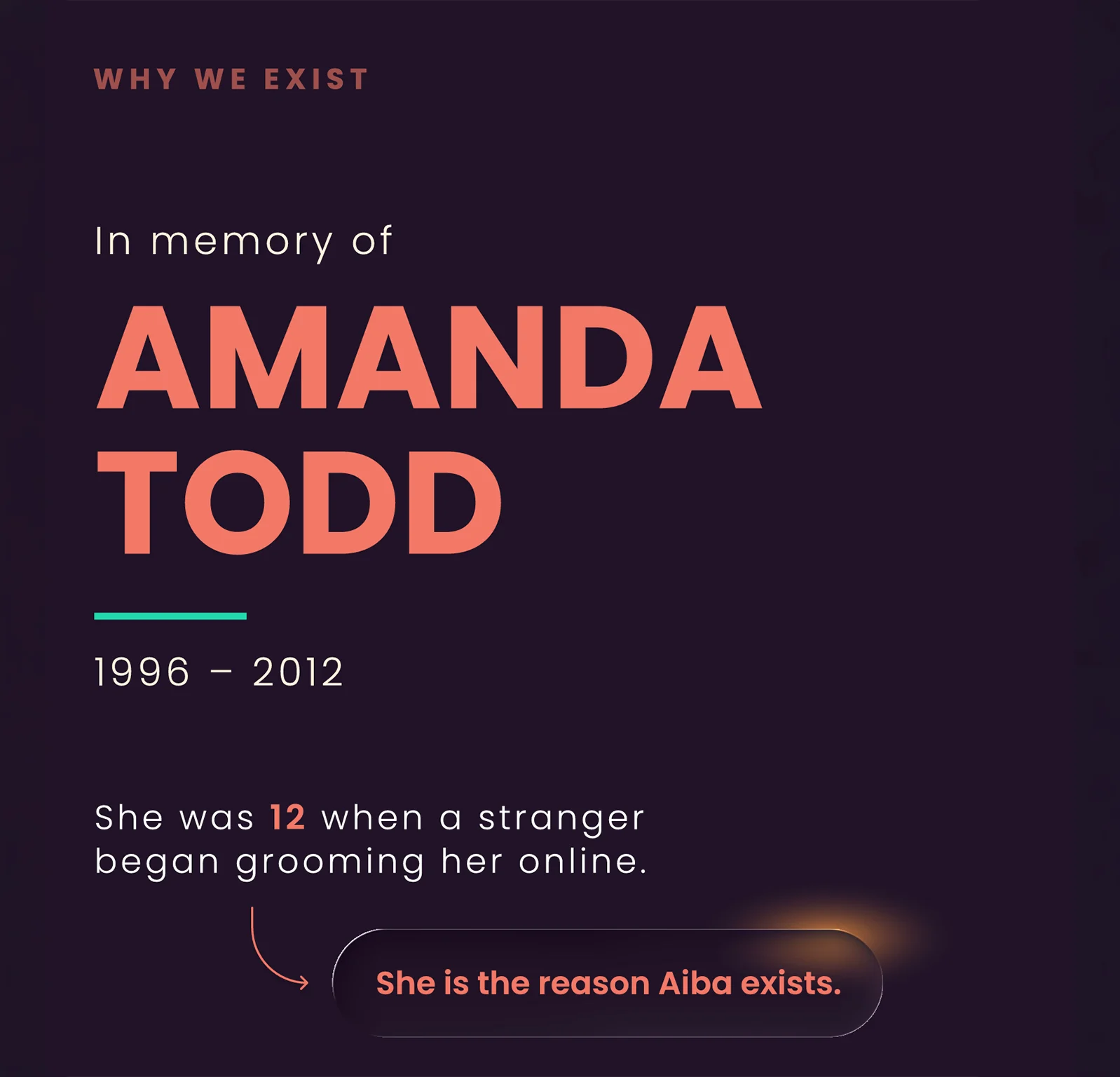
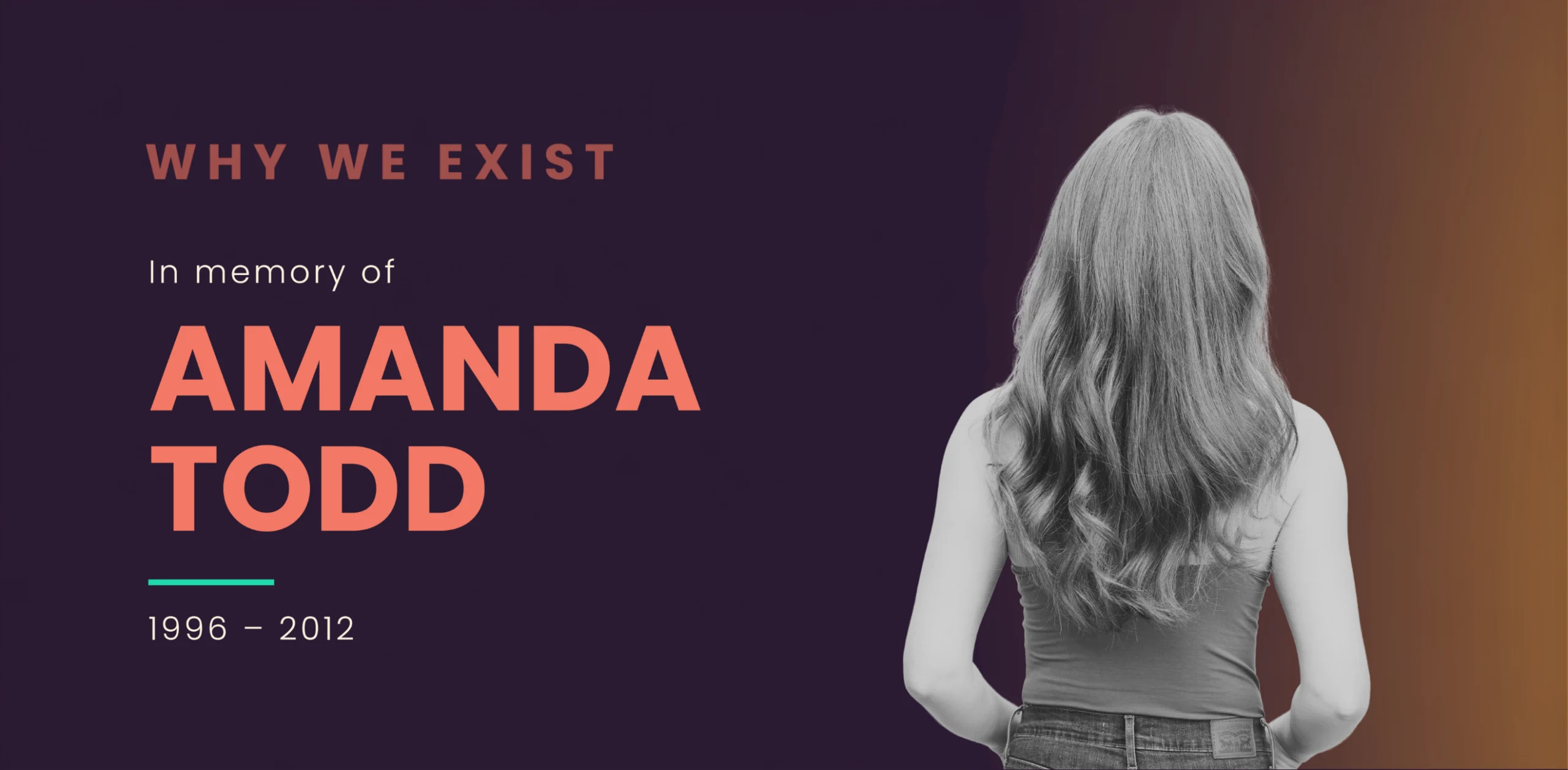
Amanda Todd was 12 when a stranger groomed and blackmailed her. She’s no longer with us. But she’s the reason Aiba exists.
She was a Canadian girl who met a boy online. He said he was 12 too. They became close, and as teens do, they shared pictures. Then she discovered he was 40. When she tried to end the contact, he turned on her. Give me more pictures, or I’ll share these with your friends and family. She didn’t believe he would.
He did. And he ruined her life.
The man was from the Netherlands. So was our professor Patrick Bours. The story was everywhere in his country, and he couldn’t stop asking one question: why couldn’t someone have warned her? He knew cybersecurity, continuous authentication, AI, and was an expert in soft biometrics. This was 2016, and he believed the technology to warn her already existed. Someone just had to build it.
I met him at the university in 2018, and I knew this couldn’t stay an idea on paper.
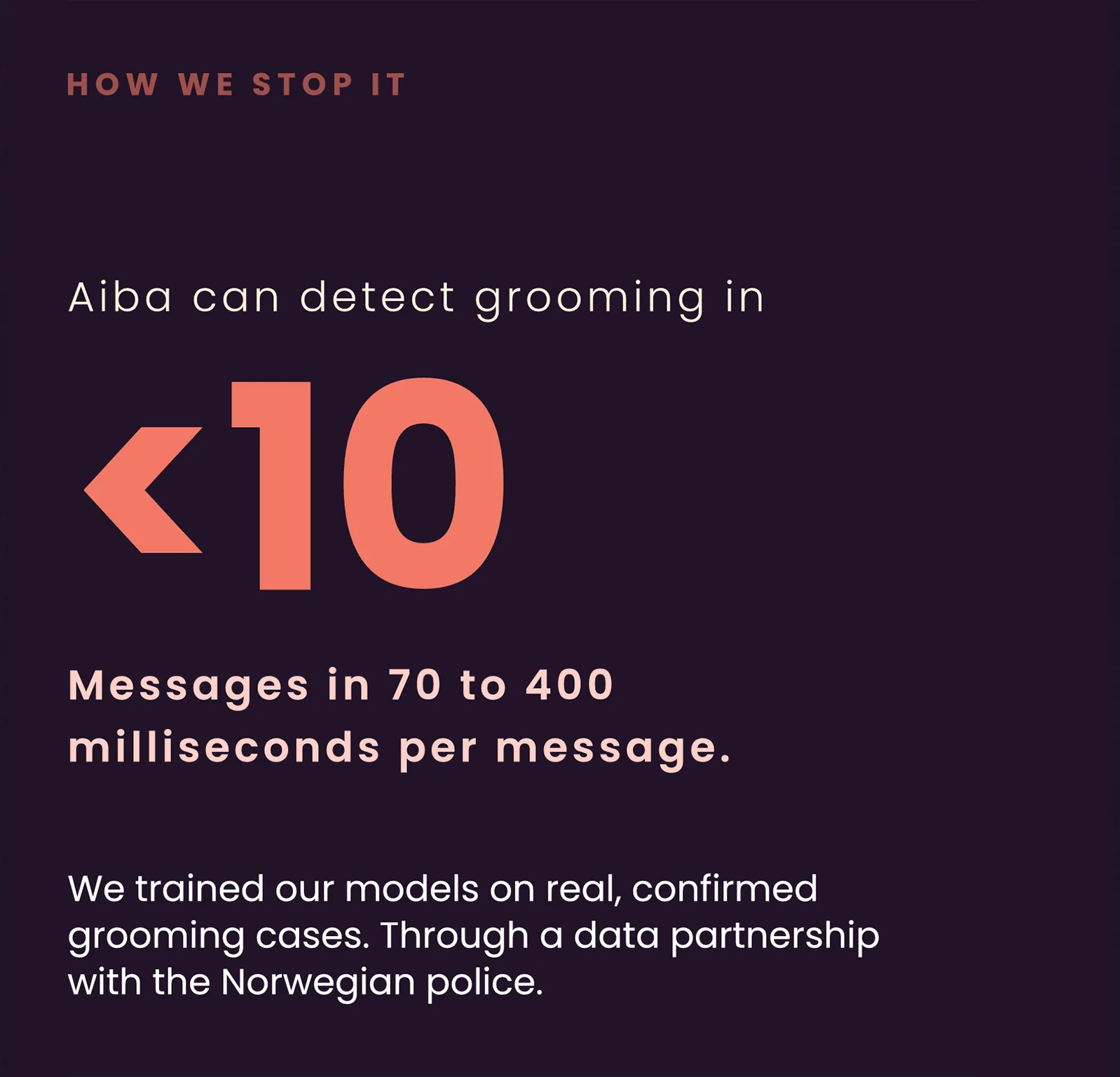
It nearly did. We got research funding, and then COVID hit. The gaming companies we’d been talking to had their hands full and couldn’t share data. So we went to the Norwegian police instead. That request went all the way to the top of the government, and it took two years before we could train our models on real, confirmed grooming cases: conversations taken from the devices of victims and offenders.
Late 2021, we could detect grooming in under 40 messages.
No one had ever done that before. In 2022, we founded Aiba.
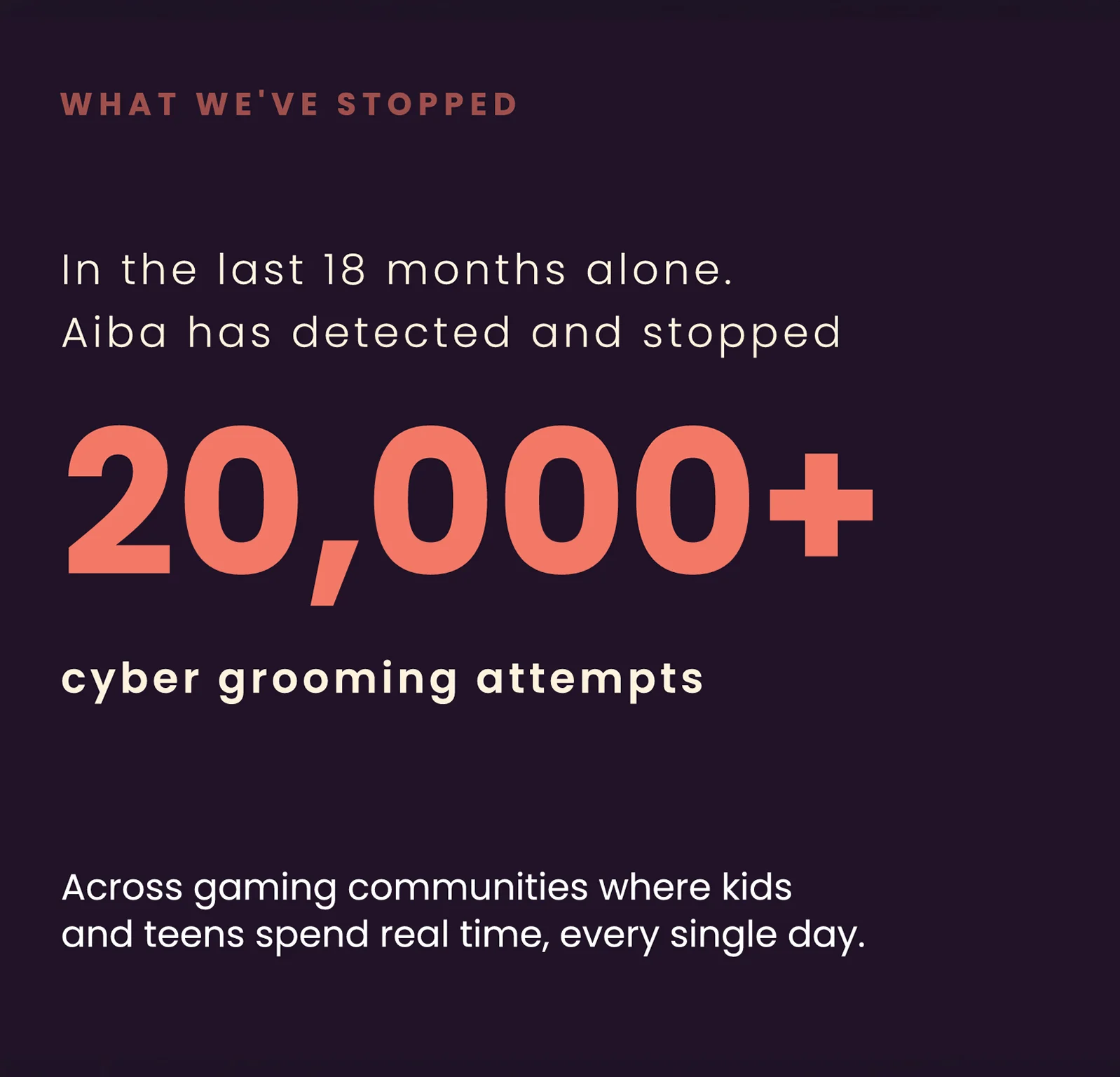
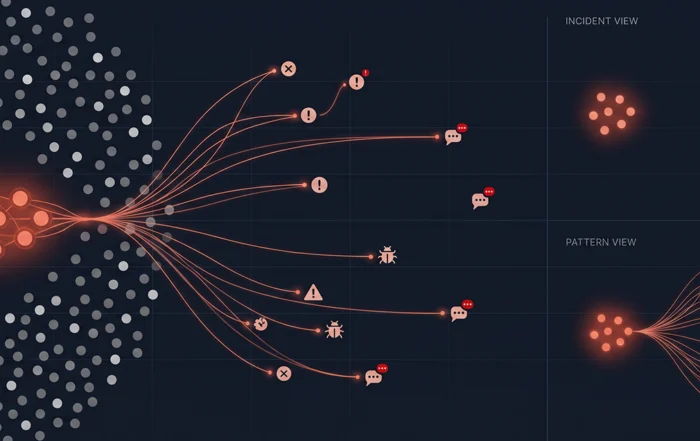
Today we do it in under 10 messages, usually at the very beginning of a conversation, before anything explicit has been said. In the last 18 months, we’ve detected and prevented over 20,000 cyber grooming attempts across games with 50 million monthly players.
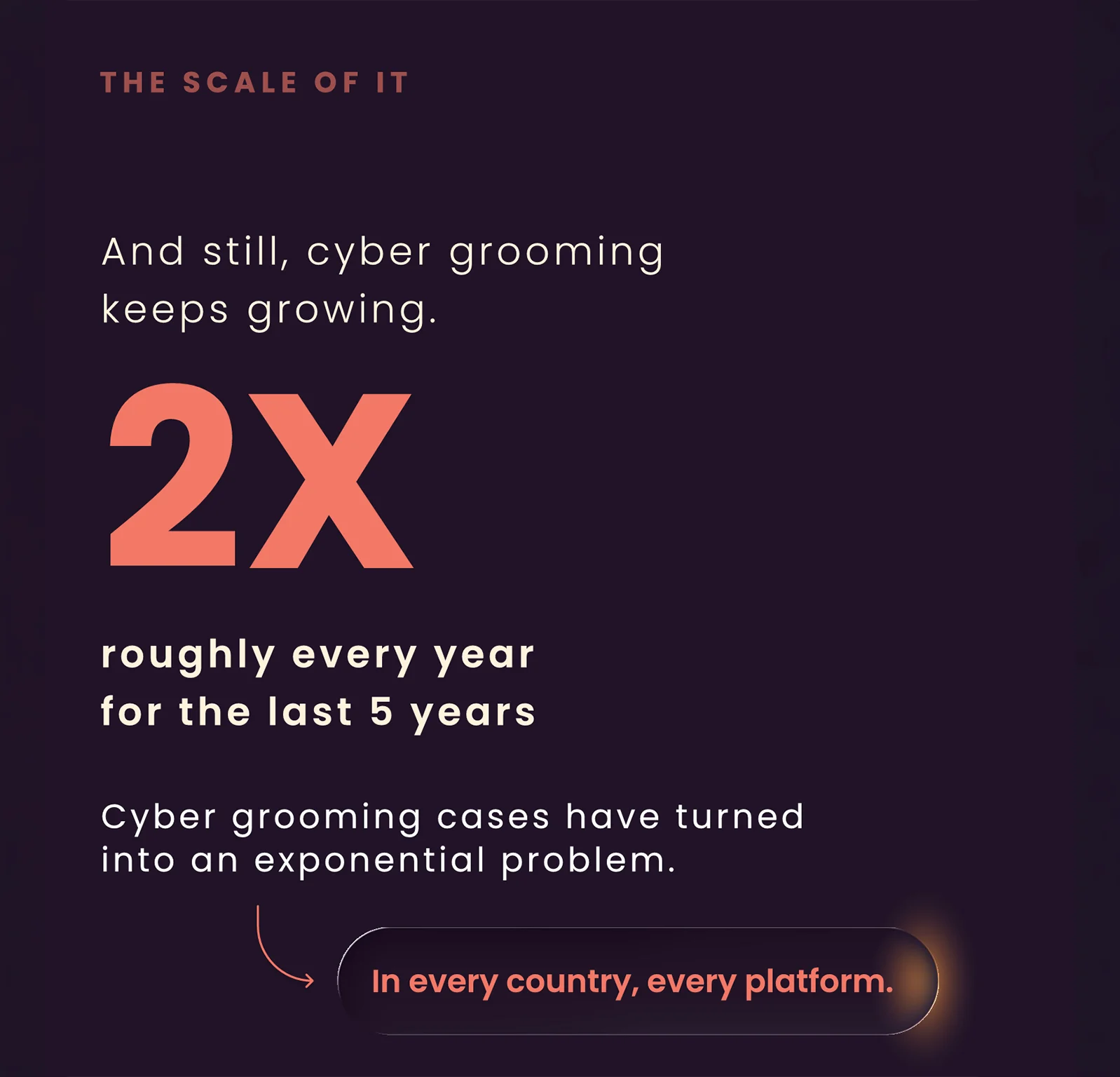
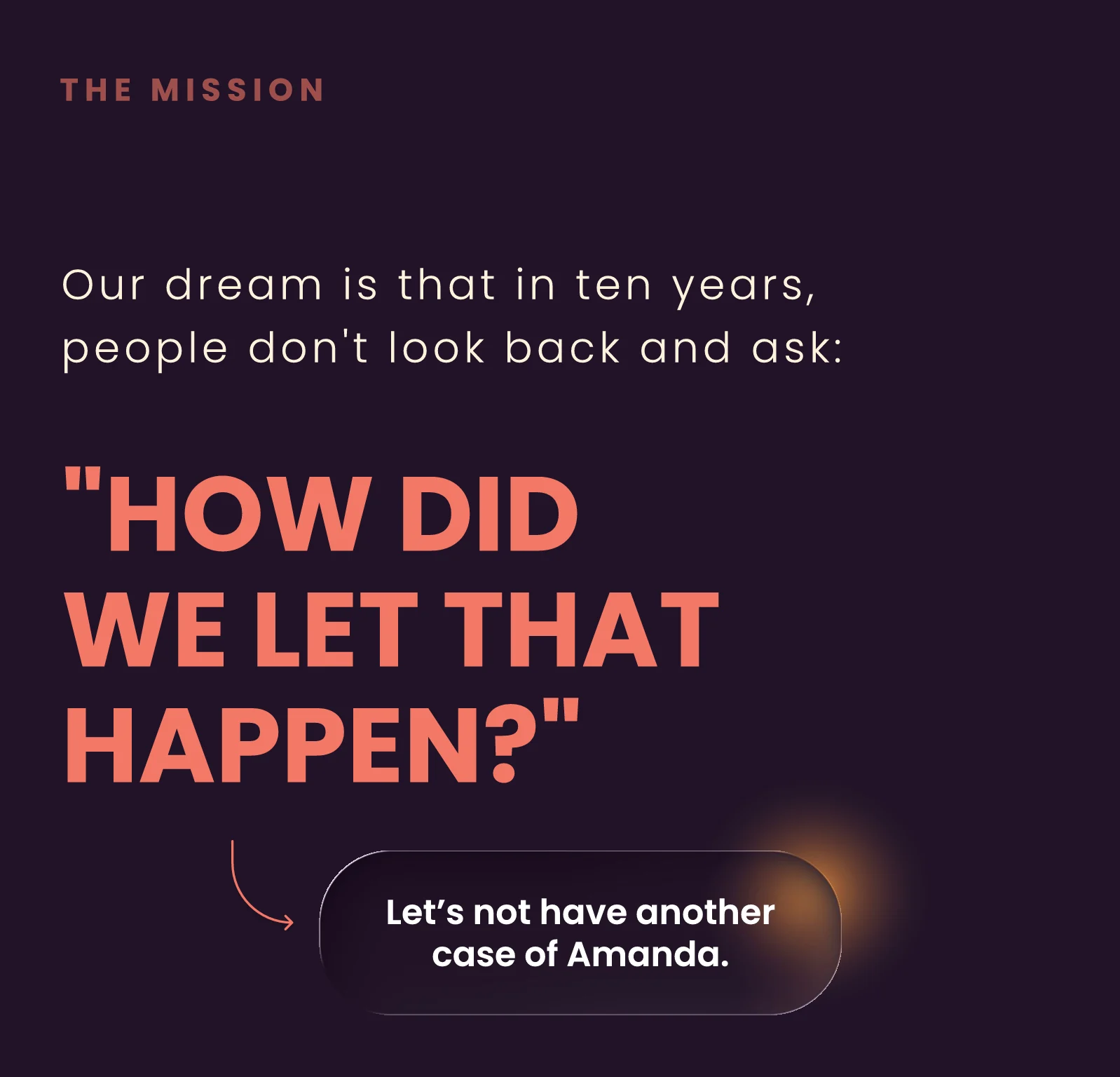
One client was convinced they didn’t have a grooming problem. Within the first half hour of going live, we caught one. And still, the problem grows. Cyber grooming cases have roughly doubled every single year for the last five years and have turned into an exponential problem. Our dream is that in ten years, people don’t look back and wonder: How did we let that happen?
Let’s not have another case of Amanda.
Full breakdown in the slides: