
By Hege Tokerud
Will moderation hurt revenue? Is protection too expensive? Could we just build it ourselves? These questions come up again and again in my conversations with game studios. Here’s how I respond to four common objections to investing in trust and safety in gaming.
The most common things studios tell me when they decide not to protect their communities:
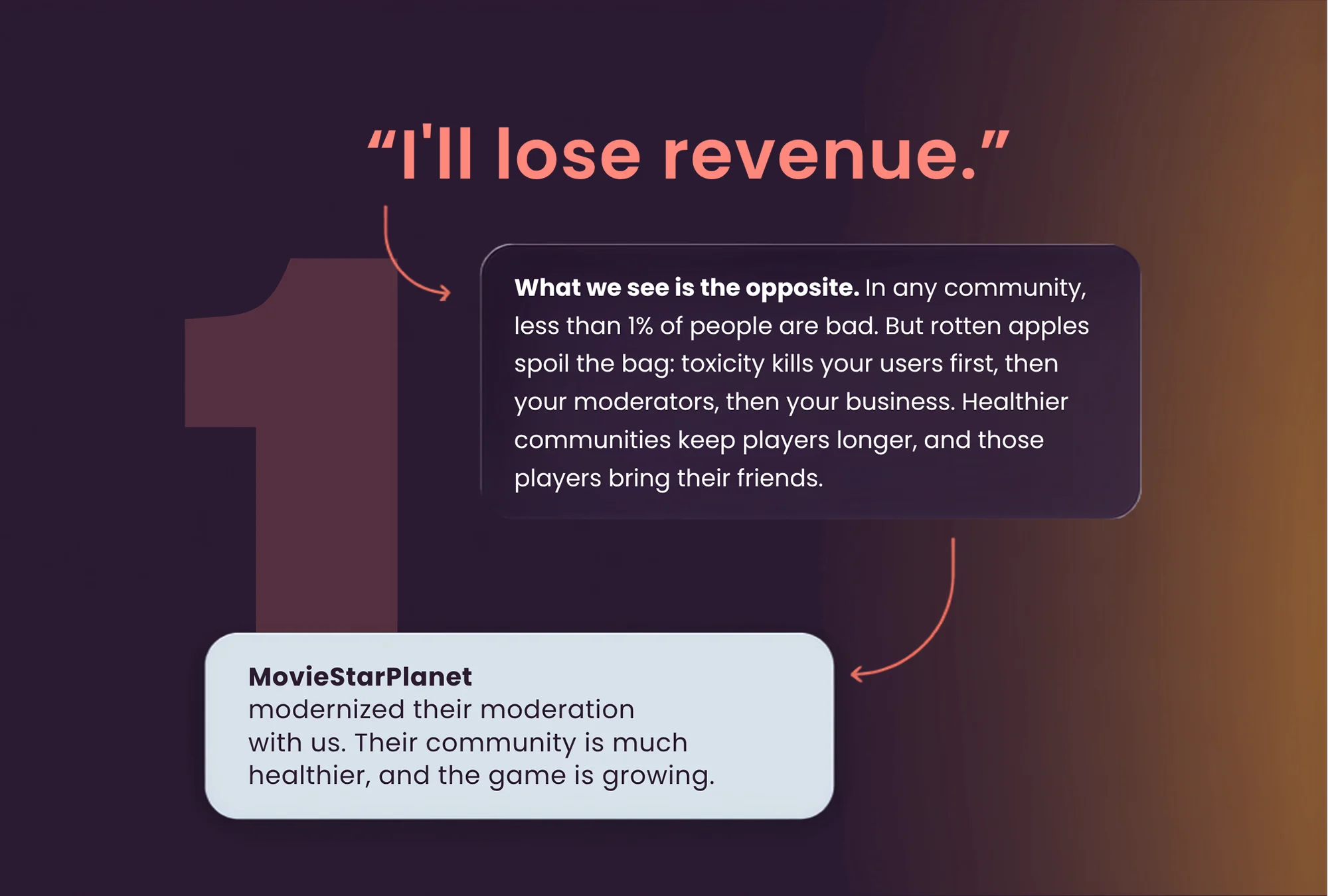
- “It will hurt my community. Players will feel over-policed. I’ll lose revenue.”
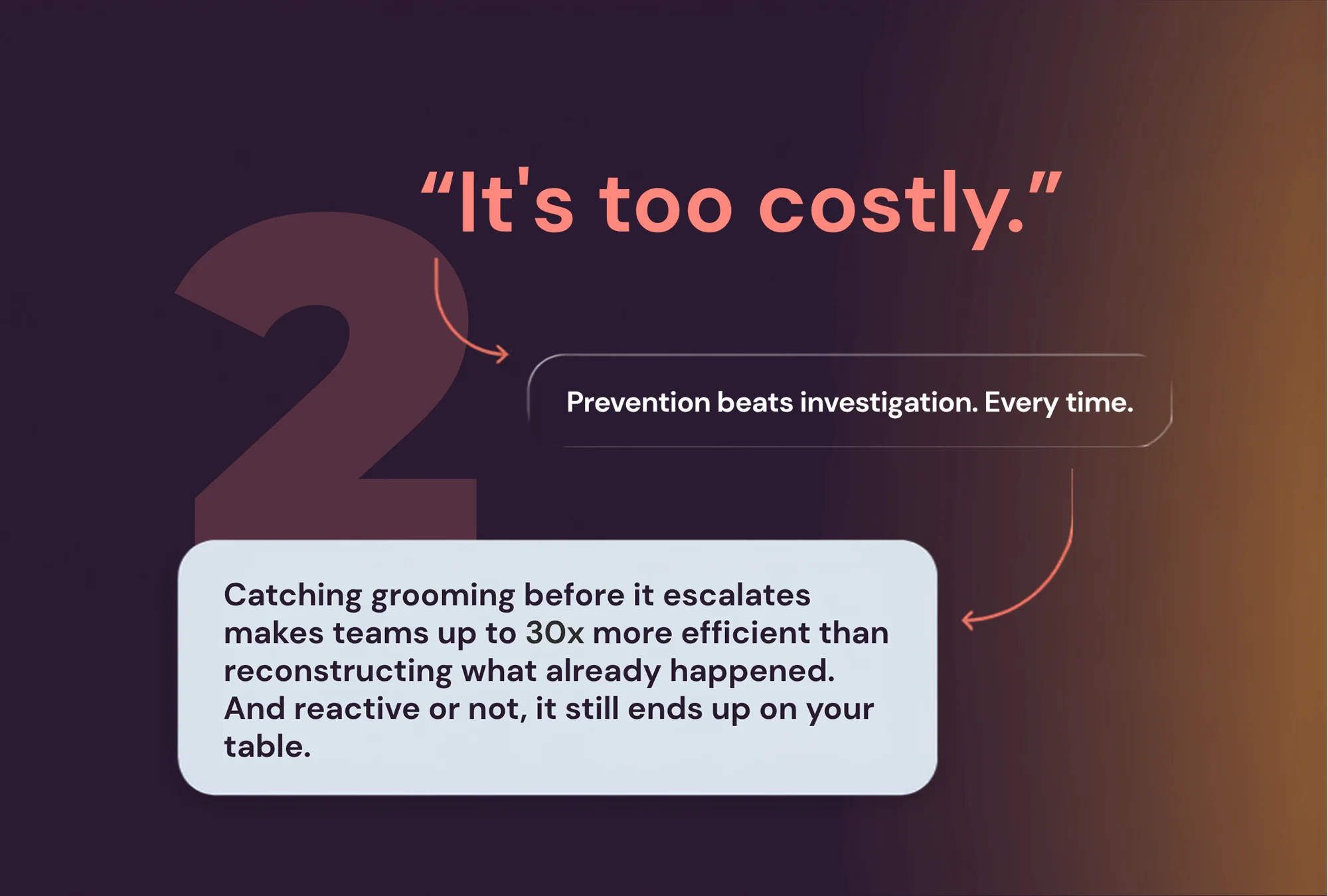
- “It’s too costly.”
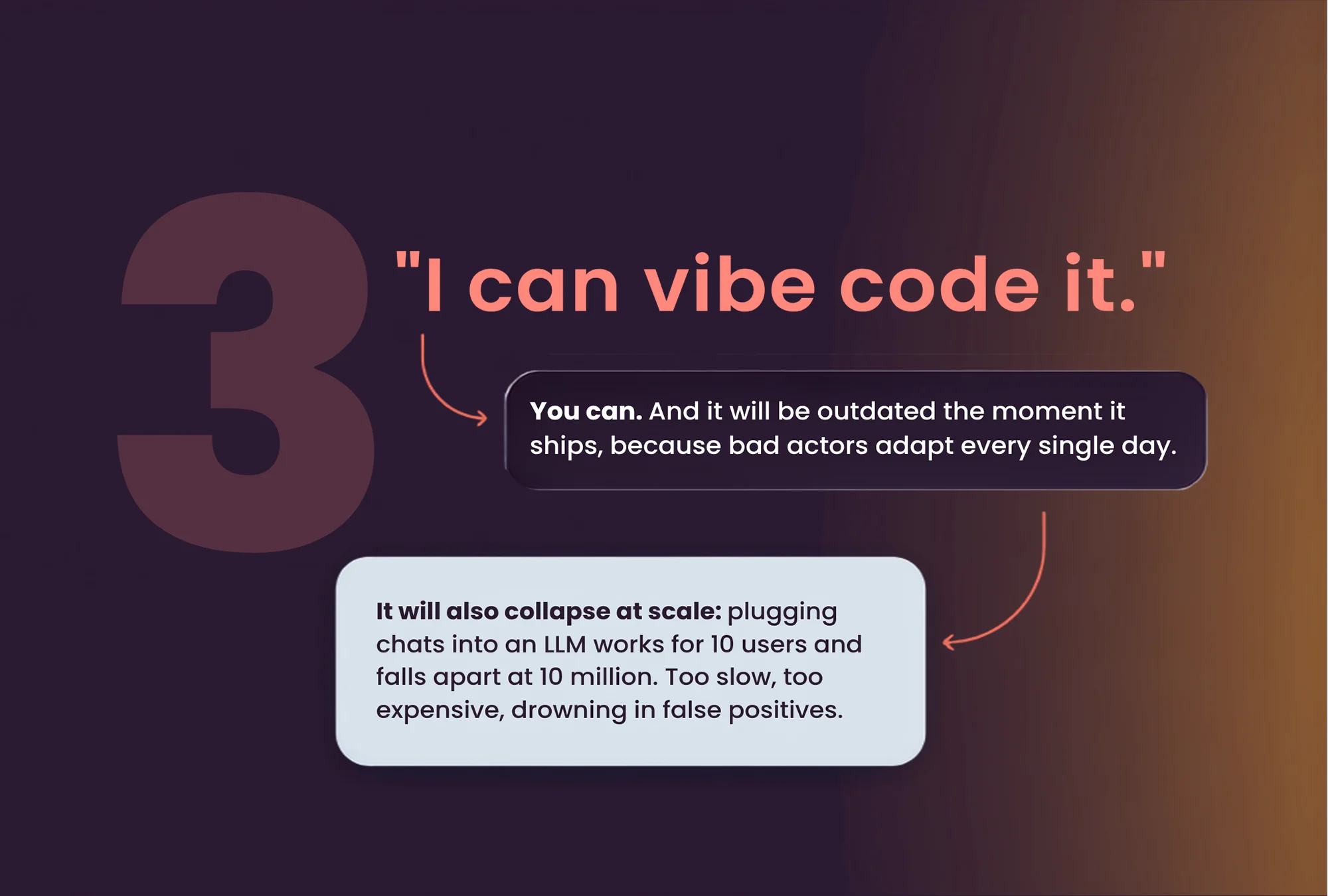
- “I can build it myself. I’ll vibe code something.”
and most often I hear:
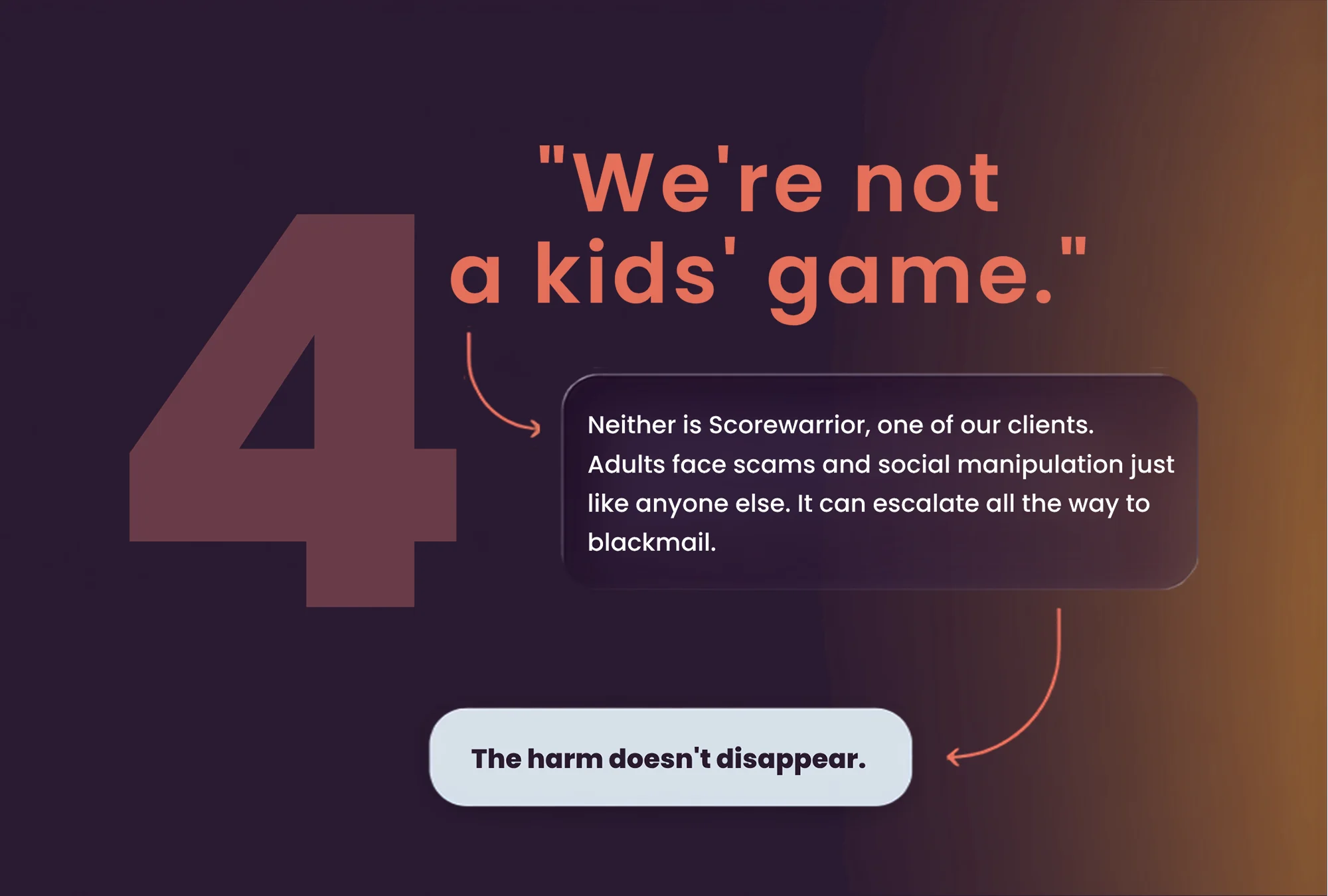
“We’re not a kids’ game.”
I understand every one of them. Trust and safety have never been a priority in this industry. Nobody plans for it. You start out running a community for your game, and one day you’re suddenly on the phone with the police. It’s reactive by nature, so most studios genuinely don’t know what they don’t know.
So let me take them one at a time.
“I’ll lose revenue.” The opposite. Less than 1% of any community is bad, but rotten apples spoil the bag. Toxicity kills your customers first, then your moderators, employees, or support team, then your business.
“It’s too costly.” Compared to what? The UK’s Online Safety Act now allows fines up to 10% of global revenue. The EU’s Digital Services Act goes up to 6%.
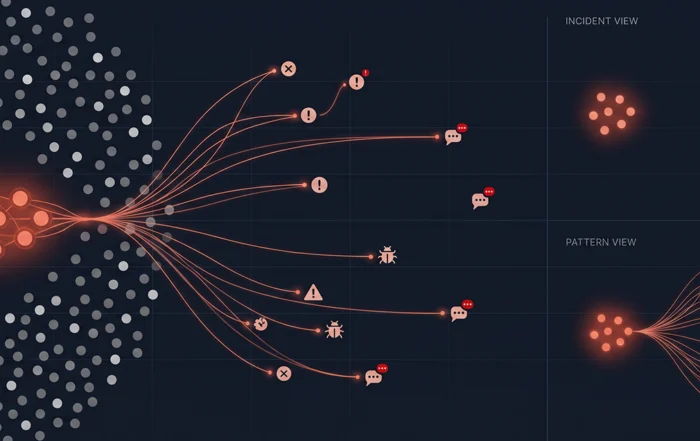
“I can vibe code it.” It will be outdated the moment it ships, and it will collapse at scale. Real detection is trained on confirmed grooming cases from police data.
“We’re not a kids’ game.” Neither is Scorewarrior, one of our clients. Adults get tricked, manipulated, and blackmailed too. The harm changes shape with the audience. It doesn’t disappear.
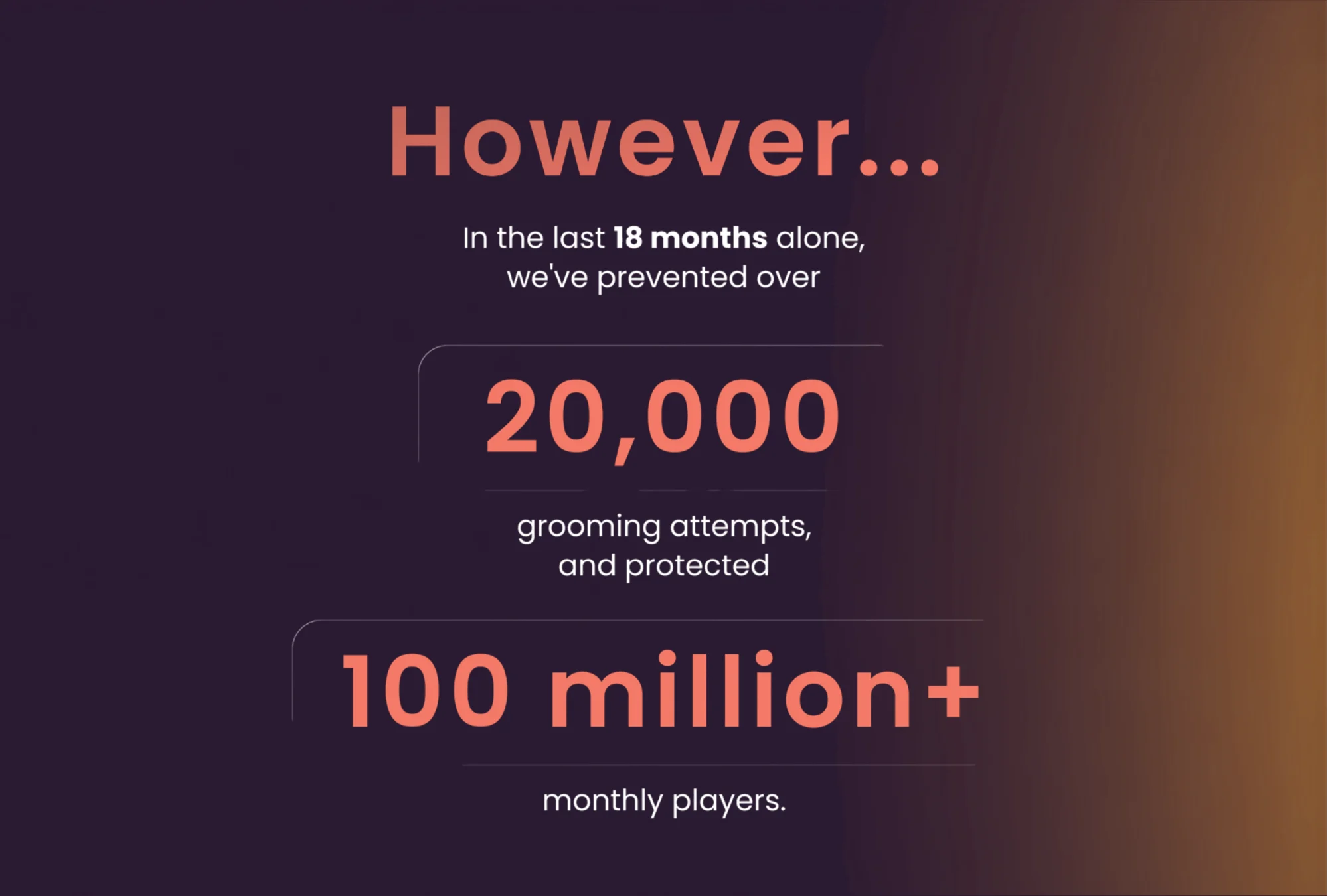
And the story I can’t stop thinking about: I know of a studio that budgeted for a multi-million-dollar fine for failing to safeguard kids, then raised funding to help cover it, instead of investing in trust and safety to stop the harm from happening. Ten years on this problem. 20,000+ grooming attempts prevented in the last 18 months, across games with 100 million+ monthly players.
This is a solvable problem. It just needs to be taken seriously.
Full breakdown in the slides: