No single behavior proves that something is wrong. What matters is a pattern, and whether your child knows they can come to you without being blamed.
A parent notices that their twelve-year-old has started taking the tablet into their bedroom. Nothing dramatic has happened. They are cheerful at dinner, still play soccer on Thursdays, and still complain about math.
But there is a new name in their life, someone who never comes to the house. When the parent asks about that person, the answer comes a little too quickly.
Many parents have experienced some version of this moment. The uncertainty that follows can be the hardest part. You do not want to accuse your child of hiding something, but you also do not want to overlook a genuine risk.
This is a guide to navigating that uncertainty: what may be worth noticing, what the research can and cannot tell us, and how to respond without turning concern into surveillance.
Warning signs are not a diagnostic test
There is no checklist that can tell a parent with certainty that a child is being groomed.
Research in this area comes from several sources, including interviews with survivors and offenders, analyses of conversations recovered during investigations, surveys of young people, law enforcement data, and studies of prevention programs.
A 2026 scoping review by Kenan Kaya and Ziyaettin Erdem synthesized 13 publications addressing cyber grooming, its risk factors, and prevention. The authors found that vulnerability is shaped by a combination of personal, social, family, and technological factors. They also emphasized that important gaps remain, particularly concerning long-term outcomes and the effectiveness of prevention programs.
Any list of possible warning signs should therefore be treated as guidance, not proof. A single behavior rarely means that grooming is taking place.
What matters is whether several changes begin to cluster, persist, and point in the same direction.
Grooming is not always slow
The familiar picture of grooming involves an adult patiently building trust over time, gradually moving from friendship to secrecy, sexualization, and abuse.
That pattern is real. The Tech Coalition describes a five-stage model involving friendship, relationship-building, risk assessment, exclusivity, and sexualization. But it also cautions that the process is not always linear. It may unfold over months or years, or escalate within minutes or hours.
Research by Juliane Kloess and colleagues reinforces this point. The researchers analyzed 29 transcripts involving 22 interactions and five convicted offenders. Some offenders used an indirect, relationship-building approach, while others moved quickly into sexual communication without many of the behaviors traditionally associated with grooming.
This was a small qualitative study, so its findings should not be generalized too broadly. But it demonstrates an important point: the absence of a long courtship does not mean the absence of danger.
Possible signs worth noticing
Many behaviors commonly described as warning signs are also normal parts of adolescence.
Wanting more privacy, becoming moody, spending more time online, or making new friends does not by itself indicate grooming. Concern becomes more reasonable when several specific changes appear together or seem connected to one particular relationship.
Vulnerability is not the child’s fault
Risk is not evenly distributed, but vulnerability should never be confused with responsibility.
Research associates increased risk with factors such as social isolation, emotional distress, limited support, low digital literacy, and inconsistent adult involvement. Offenders may deliberately identify and exploit unmet needs, for attention, validation, friendship, belonging, or financial support.
A lonely child is not responsible for an adult taking advantage of that loneliness.
This distinction matters because children often remain silent when they expect adults to focus on what they did wrong: accepting a friend request, keeping a secret, sending an image, or continuing a conversation.
Responsibility always belongs to the person who manipulated, coerced, threatened, or exploited them.
Grooming and sextortion are related, but not identical
Online grooming may lead to sextortion, but the two terms should not be treated as interchangeable.
Sextortion occurs when someone threatens to expose real or fabricated sexual images unless the victim provides money, additional images, sexual acts, or something else of value. It can follow a period of grooming, but it can also begin rapidly through deception, account compromise, or image manipulation.
The scale of online exploitation is substantial. NCMEC recorded approximately 546,000 reports of online enticement in 2024, a broad reporting category that includes grooming and sextortion. Changes in reporting requirements may account for part of the increase, so report totals should not be read as a direct count of individual victims.
Thorn’s 2025 research surveyed 1,200 young people ages 13 to 20. Among teenage respondents, one in five reported having personally experienced sextortion. Of those who experienced it, only 23% told a parent, while one in seven said they had told no one.
Boys must not be left out of this conversation. Internet Watch Foundation data has shown that boys account for the large majority of the sexual-extortion reports it receives, with financial blackmail being a recurring pattern.
Conversation may protect more than surveillance
Thorn’s research found that young people considered at higher risk of grooming were less likely to have learned about it from parents or caregivers. They were more likely to have learned about it through online communities.
In other words, some children are receiving their safety education from the same environments in which the risks occur.
Esther Calvete, Izaskun Orue, and Manuel Gámez-Guadix conducted a randomized controlled trial involving 856 Spanish adolescents ages 11 to 17. The study, published in Psychosocial Intervention in 2022, evaluated an online educational intervention that took less than one hour.
The intervention increased participants’ knowledge about grooming and reduced sexualized responses when adolescents were sexually solicited by adults. The researchers observed benefits through the six-month follow-up.
One short educational intervention cannot eliminate risk. But the study suggests that clear, age-appropriate conversations can give young people useful knowledge and practical ways to respond.
Platforms have a responsibility, too
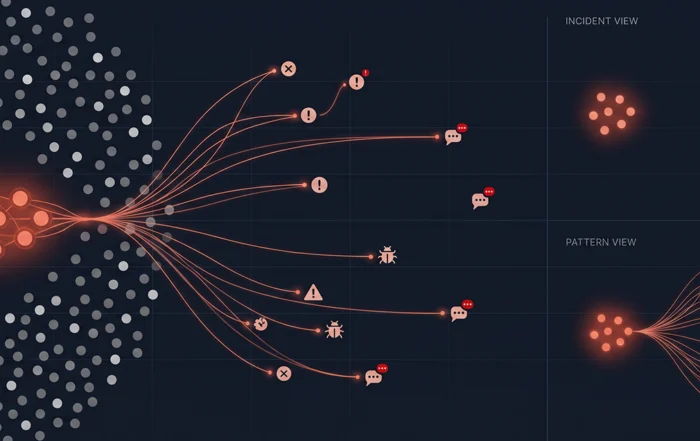
Parents see only part of a child’s digital life. Platforms may be able to identify broader behavioral signals: an account contacting many young users, repeated efforts to move conversations into private channels, escalating communication, gifts or transactions, and patterns that appear across multiple interactions.
This is where Aiba’s work sits. Aiba helps platforms surface behavioral patterns and provide moderation teams with more context for assessing potential risk.
Behavioral signals do not necessarily prove that harm has occurred. They do, however, help moderators identify dangerous situations early and stop them before its too late.
A child should not have to serve as the detection system for their own safety. Parents should not carry the entire responsibility either.
The goal is connection, not constant vigilance
The purpose of learning these signs is not to watch every message or treat every new online friend as a threat.
Fear can push parents toward surveillance at the very moment when openness is most important. Children are more likely to seek help when they believe they will be heard, protected, and treated with dignity.
What works may look quieter:
Know who your child spends time with online. Make difficult conversations feel ordinary. Explain manipulation before your child encounters it. Pay attention when several small changes cluster around one relationship.
And when something concerns you, open a conversation, not an investigation.
Sources
Kaya, K., & Erdem, Z. (2026). “Understanding Cyber Grooming in Children and Adolescents: A Scoping Review of Risk Factors and Prevention Strategies.” Frontiers in Psychiatry.
https://doi.org/10.3389/fpsyt.2026.1896109
Calvete, E., Orue, I., & Gámez-Guadix, M. (2022). “A Preventive Intervention to Reduce Risk of Online Grooming Among Adolescents.” Psychosocial Intervention, 31(3), 177–184.
https://doi.org/10.5093/pi2022a14
Kloess, J. A., Hamilton-Giachritsis, C. E., & Beech, A. R. (2019). “Offense Processes of Online Sexual Grooming and Abuse of Children via Internet Communication Platforms.” Sexual Abuse, 31(1), 73–96.
https://doi.org/10.1177/1079063217720927
Tech Coalition. “Online Grooming: Considerations for Detection, Response, and Prevention.”
https://technologycoalition.org/wp-content/uploads/Research-Paper-Online-Grooming-Considerations-for-Detection-Response-and-Prevention-of-Online-Grooming.pdf
WeProtect Global Alliance. (2025). Global Threat Assessment 2025.
https://www.weprotect.org/global-threat-assessment-25/
Thorn. (2025). Sexual Extortion & Young People: Navigating Threats in Digital Environments.
https://www.thorn.org/research/library/sexual-extortion-young-people/
Thorn. (2021). Online Grooming: Examining Risky Encounters Amid Everyday Digital Socialization.
https://www.thorn.org/press-releases/online-grooming-report-young-peoples-online-encounters-growing-riskier/
Internet Watch Foundation. (2024). “Teenage Boys Targeted as Hotline Sees ‘Heartbreaking’ Increase in Child Sextortion Reports.”
https://www.iwf.org.uk/news-media/news/teenage-boys-targeted-as-hotline-sees-heartbreaking-increase-in-child-sextortion-reports
About Aiba: Aiba is a Norway based company working with platforms around the world to make online communities safer and easier to manage. We build tools that help teams handle the difficult parts of community operations, from harassment and harmful content to reports that arrive faster than anyone can reasonably review by hand.