Choosing the right tool for each moderation task
Content moderation is one of those problems that looks simple from the outside. You have content. You want to stop the harmful stuff.
Just point an AI at it and let it run.
Anyone who has actually tried to moderate an online platform at scale knows it does not work that way. Finding an AI model that can detect harmful content is the easy part. Building a system that does it consistently, at volume, in real time, without breaking your budget or compromising user privacy is a different challenge entirely. Most AI moderation systems are not designed for that. They are designed for demos. Amanda is Aiba’s AI content moderation platform, and it was built for that reality.
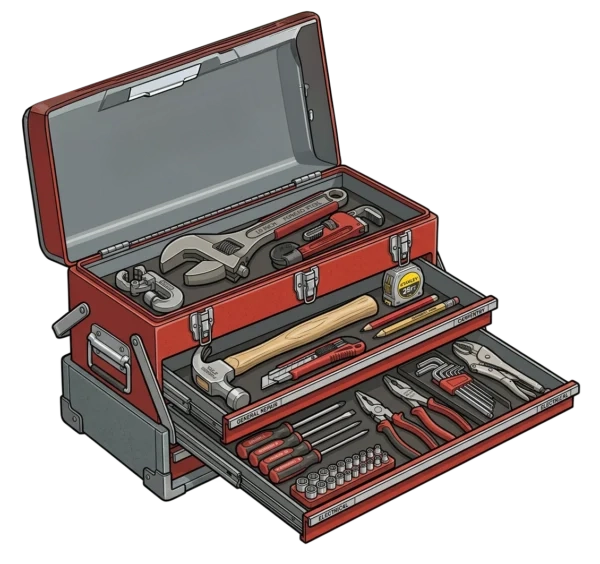
Aiba’s toolbox
The right tool for every decision


The system behind the system
Aiba has spent a significant amount of time studying how moderation teams work: where decisions get made, where backlogs pile up, where reviewers burn out, and where the system buckles under pressure. That understanding shapes the routing logic that connects all the tools.
Most content never makes it past the first layer. A large share is handled by the small language models. Only a small fraction reaches the LLM layer. The result is a system that can handle the full volume of a busy platform without burning through infrastructure costs or creating bottlenecks.

The real engineering lies in the orchestration.
That means designing routing logic that decides, accurately and in real time, which layer handles each piece of content. It means fine-tuning models for each customer’s platform, community, and policy context. And it means managing inference cost, latency, privacy, and quality at the same time, at scale. That orchestration is what turns a set of capable models into a system you can actually rely on. It is the difference between a convincing demo and something that can protect a real platform.