Content Moderation Was Built for a Different Internet
Agentic AI systems don’t just create new content risks. They expose the limits of what passive moderation was designed to handle.
For most of the history of online platforms, content moderation has worked roughly the same way. A user posts something. A system, human or automated or both, reviews it. A decision is made. The cycle repeats.
That model was never perfect, but it was coherent. The content was static. The actor was a person. The harm, when it occurred, was something you could point to.
Agentic AI changes that picture considerably.
Not a chatbot.
Not a filter.
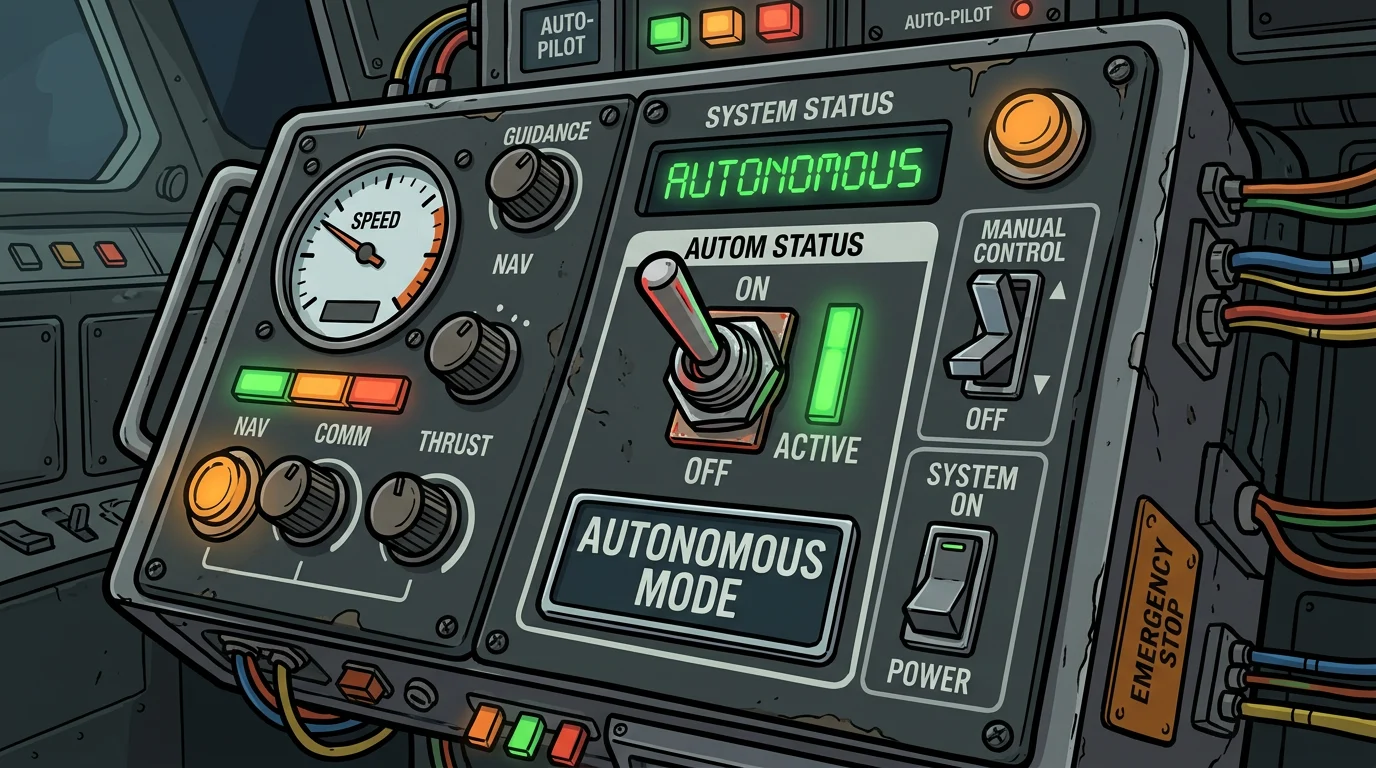
An AI agent is not a chatbot you prompt and read back. It is a system that receives a goal, breaks it into steps, and takes actions across tools and interfaces, adjusting its behavior based on what it encounters. It can browse, write, execute, and communicate, often without a human involved at any stage.
Some gaming studios are beginning to explore agents that operate in live sessions, respond to player behavior in real time, and interact directly with users. The operational case is clear enough. Human moderators cannot be everywhere at once.
But the risk profile of an agent is different from the risk profile of a post, and that difference matters.
By the time you see it,
it has already happened
Traditional content moderation is retrospective by design. Something happens, it gets flagged, it gets reviewed. The harm has already occurred by the time the system responds. For a text post, that lag is often acceptable. For an agent operating in a live session with real users, it rarely is.
The Partnership on AI has written clearly on why human oversight cannot simply scale to cover agent behavior. When you design a system to reduce human involvement in multi-step tasks, continuous supervision becomes structurally impractical. Safety has to be built into the system from the start, not added as a review step afterward.
This is a different problem than the one most T&S teams were hired to solve.
Stakes
Reversibility
Reach
Not every agentic deployment carries the same exposure. The Partnership on AI’s framework for real-time failure detection offers three useful dimensions:
Stakes. What is the worst realistic outcome if the agent acts incorrectly? An agent moderating a general chat channel is a different situation from one interacting with a minor in a one-on-one session, or executing an account-level enforcement action.
Reversibility. Can the harm be undone? A wrongly deleted message is recoverable. A wrongly banned account causes real damage to a real person. An agent that escalates a situation in a live environment may not be stoppable before consequences land.
Affordances. What can the agent do? Read-only access to a feed is not the same as write, execute, and communication permissions across a platform.
Gaming studios moving toward live agent moderation should be mapping their deployments against all three.
The question Aiba always ask first
When we work with gaming clients exploring agentic workflows, we ask a straightforward question: at what point in this system does a human have a meaningful opportunity to intervene?
The answer is usually somewhere between “when something goes wrong” and “we haven’t worked that out yet.” Neither is a safety posture. The first is incident response. The second is unmanaged exposure.
What we advocate for is designing escalation logic before deployment. Define the thresholds at which an agent’s action should pause and surface for review. Define what high stakes means in your specific environment. Know which actions are reversible and which are not, before a user finds the boundary for you.
This is not
a future problem
Agentic AI is not a future problem for most gaming and community platforms. Deployments are early, but the risk questions are current.
The teams that handle this well tend to ask a different kind of question. Not “is our moderation catching harmful content” but “what is our system capable of doing on its own, and what happens when it gets that wrong.”
That shift, from content review to system design, is what agentic AI demands from T&S. Regulatory frameworks including the DSA, the UK Online Safety Act, and COPPA are heading in the same direction. Demonstrating that you assessed the risks before something went wrong is increasingly an expectation, not an optional extra.
The frameworks for thinking about this clearly already exist. The gap is in using them.
If you are thinking through how your moderation setup handles agentic risk, we are happy to talk through what we are seeing across gaming and community platforms.