
By Hege Tokerud
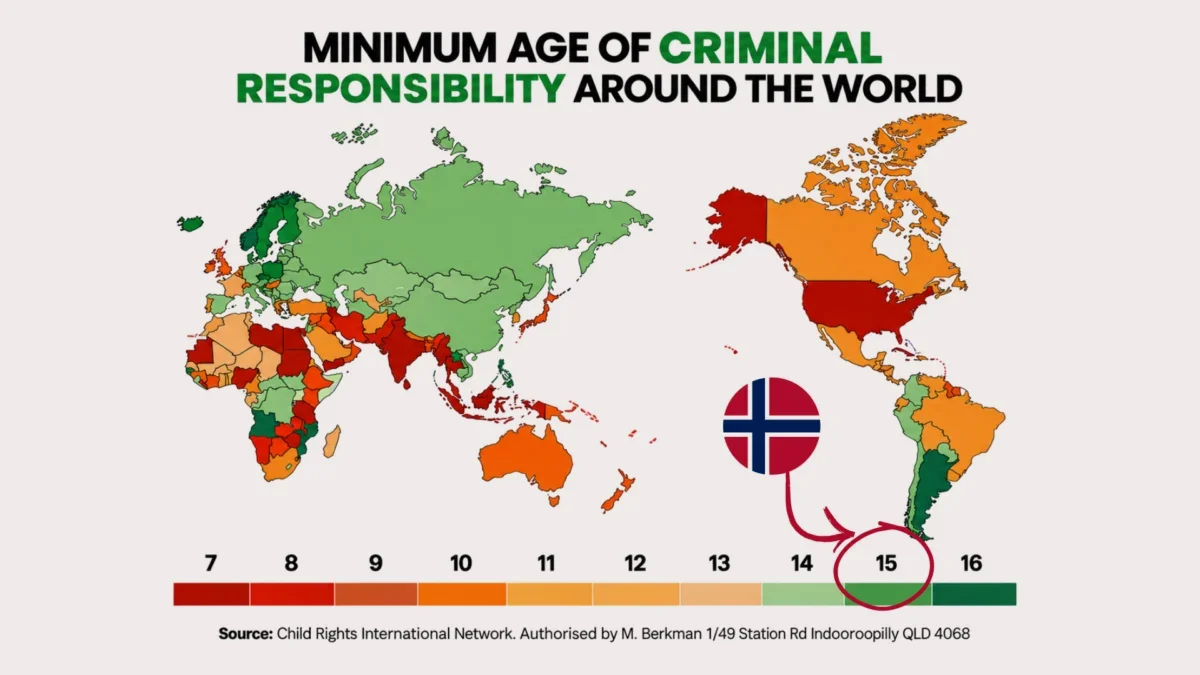
In Norway, no one under 15 can be held criminally responsible. Criminal networks know this, and they know the age in every other country too. So they recruit children through the games and apps those children already use.
The age of criminal responsibility is a map, and the people running these networks have it memorised. In Norway, Sweden, Denmark and Finland it is 15. In England and Wales it is 10. Wherever the line sits, a child below it is the person a criminal network wants carrying the bag, because a child below it carries almost none of the risk. Europol has a name for the market this creates: violence as a service.
The first message is not a threat. It is an offer. Cash, clothes, status, on TikTok, Instagram, Snapchat, Discord, Telegram. Friendly, patient, and aimed at a kid who has already told the internet a great deal about what they want.
Then comes a favour. Can you bring this bag from A to B. The kid is not allowed to ask what is inside, and the payment is real, which makes the whole thing feel like a job rather than a crime.
And now they are in the loop. The next message is the one that closes the door: we have proof you did this, do what we say or we tell your parents. The Norwegian police describe the same mechanism in their own guidance, including networks that hand a young person money or drugs to sell and then demand the debt be worked off.
From there it escalates. Other crimes, sometimes across borders, in some cases tied to serious violence. It is a transaction. Do something bad, get paid.
You could have a 14 year old recruiting other children on your platform right now. This is the part that surprises people most, and it is the part that breaks most detection logic, because a system tuned to look for adults approaching minors will not see a peer to peer conversation as a threat.
Europol’s assessment of organised crime in Europe names Snapchat, Telegram and Discord as recruitment channels and describes victims as young as 14 and 15. Andy Kraag, who leads Europol’s serious and organised crime centre, put it plainly: these networks see the children as disposable.
These networks work from something close to a manual. The pattern I have seen starts by making a child feel unwanted. No one likes you. No one cares about you. Then someone offers a way in.
It works because it is aimed at children who already feel like they do not belong anywhere. Money is part of the pull. Belonging is the larger part, and it is the part a platform is in a position to notice, because the isolation happens in the conversation.
We cannot prosecute our way out of this. These children do not believe they are doing anything wrong. They want cash and they want to be part of something, and by the time a case exists there is already a child in the middle of it.
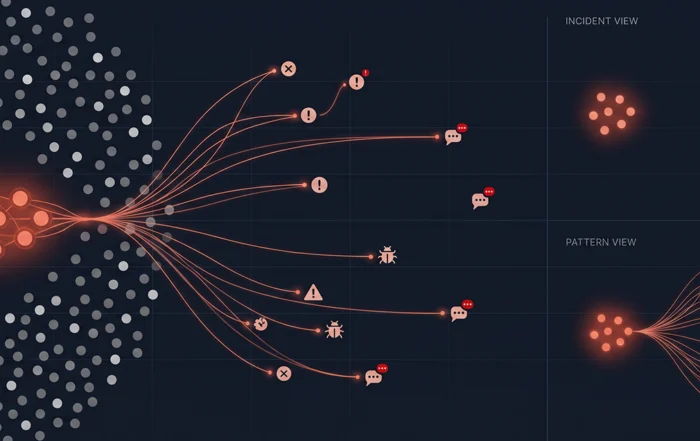
The intervention that matters is earlier: detecting the recruiter before a child is in the loop. The signals are in the conversation itself, in the flattery, the isolation, the move to a private channel, the first favour. Grooming and manipulation follow structures that can be recognised in the opening exchanges of a chat, well before anyone hands over a bag.
That is exactly why we built Aiba.
Gaming, social media and marketplaces did not take this seriously enough on their own, and now the law says they have to. Under the EU’s Digital Services Act, failing to meet those obligations can cost up to 6% of global annual turnover. Under the UK’s Online Safety Act, Ofcom can go to 10% of qualifying worldwide revenue. Both ceilings sit above GDPR’s 4%.
The regulatory pressure is real, but it is the smaller reason to act. Somewhere on a platform tonight, a child is being told that no one cares about them, by someone who is about to offer them a way in. That conversation is detectable. That is the whole argument.
Want to know what this looks like on your platform? Tox Scan analyses a sample of your community’s real conversations and shows you the patterns already there, including grooming and recruitment behaviour.
References
- Europol, EU Serious and Organised Crime Threat Assessment 2025, on recruitment of minors and violence as a service, as reported by NL Times: https://nltimes.nl/2025/03/18/violence-service-europol-concerned-criminals-recruiting-teens-online
- Norwegian Police, “Rekruttering til kriminelle nettverk”: https://www.politiet.no/rad/kriminelle-nettverk/rekruttering-til-kriminelle-nettverk
- Digital Services Act penalties, up to 6% of global annual turnover: https://digital-strategy.ec.europa.eu/en/policies/dsa-enforcement
- Online Safety Act penalties, up to 10% of qualifying worldwide revenue or £18 million, whichever is greater: https://www.legislation.gov.uk/ukpga/2023/50/schedule/13/paragraph/5/enacted